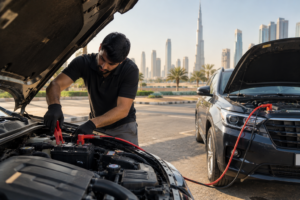


You get into your car at 3 pm in July, press the AC button and wait. The air coming out of the vents is lukewarm at best. By the time you reach the Sharjah Corniche or the E11 near Abu Dhabi, the steering wheel is too hot to hold, your shirt is stuck to your back and you are wondering how long this has been going wrong.
A car AC that is not cooling is an air conditioning system that cannot remove enough heat from the cabin, usually because of low refrigerant, a faulty compressor, a blocked condenser, weak airflow or an electrical fault. In the UAE, where we run the AC almost every day of the year, even a small drop in cooling power is hard to ignore.
The good news is that the cause is often easy to find, and many fixes are quick. In this guide, we walk through the most common reasons your car AC is blowing warm air, the checks you can safely do yourself, the repair options and what each one involves, and when it is time to call a professional anywhere in the seven emirates.
Quick answer: The most common reason a car AC stops cooling is low refrigerant caused by a leak. Other causes include a failing compressor, a dirty condenser, a clogged cabin air filter, a faulty blower motor or an electrical fault. Start with simple checks, and call a mechanic if the air stays warm, because refilling gas without fixing the leak only works for a short time.
How Does a Car AC System Work?
Your car AC does not create cold. It removes heat from the cabin and moves it outside. Here are the main parts:
- Refrigerant: the gas that carries heat out of the cabin as it changes between liquid and gas.
- Compressor: the pump that pressurises the refrigerant. It is driven by the engine belt and switched on by a clutch.
- Condenser: a radiator style unit at the front of the car that releases heat to the outside air.
- Receiver drier or accumulator: filters the refrigerant and removes moisture.
- Expansion valve or orifice tube: controls how much refrigerant enters the evaporator.
- Evaporator: the small cooling core behind the dashboard that chills the air before it reaches you.
- Blower motor and cabin air filter: push the cooled air through the vents.
If any one of these parts struggles, the whole system suffers. That is why a proper diagnosis matters more than a quick guess.
Why Car ACs Struggle in the UAE
Most drivers elsewhere use the AC for a few weeks a year. Here, it works almost nonstop, and that puts wear on every component.
- Extreme heat: the hotter it is outside, the harder the system has to work to push heat out of the car.
- Nonstop use: compressors, clutches, fans and seals age faster when they run all year.
- Dust and sand: fine dust blocks condenser fins and clogs cabin air filters, especially around construction zones in Sharjah, Ajman and Dubai and desert edge areas of Abu Dhabi and Umm Al Quwain.
- Humidity on the coast: moisture in the evaporator can cause mould, bad smells and corrosion around Dubai Marina, Ajman Corniche, Al Marjan Island and Fujairah.
- Stop and go traffic: with less airflow across the condenser, cooling drops at idle. Sheikh Zayed Road and Emirates Road at rush hour are classic examples.
- Sun baked parking: a car parked in direct sun starts from a much hotter cabin, so the AC has more to do.
AC use also costs fuel. The US Department of Energy notes that under very hot conditions, AC use can reduce a conventional vehicle’s fuel economy by more than 25%, particularly on short trips. A system that is struggling has to work even harder. Dubai’s RTA also lists air conditioning systems among the items drivers should check as part of regular summer maintenance.
10 Common Reasons Your Car AC Is Not Cooling
1. Low Refrigerant From a Leak
This is the most common cause. A car AC is a sealed system, so it should never run low on its own. If the level has dropped, there is a leak somewhere, often at a hose, an O ring, the condenser or the compressor seal. AAA’s Approved Auto Repair team says that if the AC is not keeping the cabin as cool as it used to, it may mean the refrigerant level is low or there is another problem.
Signs: the air is cool but not cold, cooling fades over weeks, or you hear a hissing sound.
2. A Failing Compressor or Clutch
The compressor is the heart of the system. If it fails or the clutch does not engage, the refrigerant does not circulate and the air stays warm.
Signs: no cold air at all, a grinding or squealing noise when the AC is on, or the clutch at the front of the compressor not clicking in.
3. A Dirty or Blocked Condenser
The condenser sits at the front of the car and collects dust, sand, insects and debris. When it is blocked, heat cannot escape and cooling suffers.
Signs: the AC works on the highway but gets warm in traffic.
4. A Faulty Condenser or Cooling Fan
The fan pulls air across the condenser when you are stopped or moving slowly. If it fails, the system cannot release heat at low speeds.
Signs: cold air while driving fast, warm air at traffic lights, and sometimes an engine that runs hotter than normal.
5. A Clogged Cabin Air Filter
This filter cleans the air entering the cabin. When it is full of dust, airflow drops sharply, so even properly cooled air barely reaches you.
Signs: weak airflow from the vents on every fan speed, a dusty smell and more noise from the fan.
6. A Faulty Blower Motor or Resistor
If the blower motor is worn out, or the resistor that controls its speed fails, air will not move properly through the vents.
Signs: no airflow at some fan speeds, whining noises or air that works only on the highest setting.
7. Electrical Faults
Fuses, relays, pressure switches and sensors all control the AC. A single blown fuse or faulty relay can stop the compressor from switching on. You can read more about this in our guide to common car electrical problems in the UAE.
Signs: the AC button lights up but nothing happens, or the AC cuts in and out.
8. A Blocked Expansion Valve or Receiver Drier
Debris or moisture in the system can restrict refrigerant flow. This often happens after a compressor failure or when the system has been opened and not serviced properly.
Signs: patchy cooling, frost on AC pipes or a system that cools for a while and then stops.
9. A Leaking or Dirty Evaporator
The evaporator sits behind the dashboard, so problems are harder to see. It can leak refrigerant, grow mould or freeze over when airflow is poor.
Signs: a musty smell, wet carpets on the passenger side, ice on the vents or weak cooling that does not improve.
10. A Stuck Blend Door Actuator
This small motor controls whether air passes over the heater core or the cooler core. When it sticks, you may get warm air even though the AC is working.
Signs: warm air on one side only, temperature that does not change when you adjust it, or a clicking sound behind the dashboard.
Symptom Checker: What Is Your AC Telling You?
- Warm air only at idle or in traffic: condenser fan, dirty condenser or low refrigerant
- Cold on one side, warm on the other: low refrigerant or blend door fault
- Weak airflow on all settings: clogged cabin filter or blower motor
- Musty or sour smell: mould on the evaporator or a dirty filter
- Clicking on and off repeatedly: low refrigerant, pressure switch or relay fault
- Grinding or squealing when AC is on: compressor or belt problem
- Ice on the vents: poor airflow or moisture in the system
- Water on the passenger floor: blocked evaporator drain
Simple Checks You Can Do Before Calling a Mechanic
- Check the airflow. Turn the fan to high. If air is weak, suspect the cabin filter or blower motor.
- Listen for the compressor. With the engine running and AC on, you should hear a soft click as the clutch engages.
- Look at the condenser. Look through the front grille for leaves, plastic bags or heavy dust. Do not use a pressure washer, which can bend the fins.
- Check the cooling fan. With the AC on and the engine warm, the fan at the front should spin.
- Test the fuse. Your owner’s manual shows the AC fuse and relay locations.
- Replace the cabin filter. It is cheap, easy on most cars and makes a real difference in dusty areas.
- Note the pattern. Does it fail only in traffic, only after a long drive or only on hot days? That detail helps a mechanic find the fault faster.
Never open AC lines or release refrigerant yourself, and never remove a radiator cap when the engine is hot.
Repair Options Explained
AC Inspection and Leak Test
A mechanic checks pressures, inspects the components and looks for leaks using UV dye or an electronic detector. This is the right first step in almost every case.
AC Recharge (Regas)
The old refrigerant is recovered, the system is vacuumed to remove air and moisture, and the correct amount of the right refrigerant and oil is added. This only makes sense after any leak is fixed. Recharging a leaking system just means the gas escapes again.
Leak Repair
This can mean replacing O rings, hoses, seals or a damaged condenser. Fixing the source is what gives you lasting cooling.
Condenser Cleaning or Replacement
A dirty condenser can often be cleaned carefully. A damaged or leaking one needs replacing.
Compressor or Clutch Repair
Sometimes only the clutch or a relay fails. If the compressor has failed internally, it must be replaced, and the system should be flushed and the drier changed to remove debris.
Cabin Filter and Blower Motor Replacement
Both are quick fixes that restore airflow. If your vents are weak, start here.
Electrical Repairs
Replacing a fuse, relay, pressure switch or sensor is often fast, but finding the fault needs proper diagnostic tools.
Evaporator Cleaning or Replacement
Mould can often be treated with a professional clean. A leaking evaporator means removing the dashboard, which is a bigger job.
Costs depend on your car, the refrigerant type, the part and the labour involved. Newer cars with R1234yf refrigerant generally cost more to service than older cars using R134a. Always ask for a diagnosis and a clear quote before approving work.
DIY vs Professional: What Is Safe to Do Yourself?
Safe for most drivers:
- Changing the cabin air filter
- Checking fuses
- Clearing leaves and loose debris from the front grille
- Using sunshades and parking in shade
Leave to a professional:
- Anything involving refrigerant, hoses or pressure
- DIY recharge kits, which cannot fix a leak and can overfill the system
- Compressor, condenser or evaporator work
- Electrical diagnosis beyond a quick fuse check
Repair or Replace? How to Decide on an Older Car
If your car is older, the question becomes whether a big AC repair is worth it. A good approach:
- Get a full diagnosis first so you know exactly what has failed.
- Compare the quote with the value of the car and how long you plan to keep it.
- Ask whether a smaller fix, like a leak repair and recharge, will restore cooling.
- Remember that a failed compressor often means flushing the system, which adds to the cost.
- In the UAE, a working AC is close to essential, and it matters if you plan to sell the car.
How to Cool Your Car Faster on a Hot Day
These tips ease the strain on a working system and help a weak one cope:
- Park in shade or covered parking, such as at Dubai Mall, Yas Mall or Sahara Centre, or use a windscreen sunshade.
- Let the hot air out first. The US Department of Energy advises that letting hot air out of the cabin first puts less demand on the AC and helps the car cool faster.
- Start driving, then use the AC. Air conditioning works best when the car is moving.
- Use recirculation once the cabin cools. It re-cools already treated air.
- Switch to fresh air now and then, so the cabin does not get stale.
How to Keep Your Car AC Healthy
- Have the AC checked once a year, ideally before summer.
- Replace the cabin air filter every year, or sooner if you drive in dusty areas.
- Run the AC for a few minutes every week, even in cooler months, to keep seals lubricated.
- Keep the condenser clear of dust and debris.
- Fix small leaks early, before the compressor runs short of oil.
- Turn off the AC a minute before you park and let the fan run, so the evaporator dries out.
- Never ignore weak cooling. It rarely fixes itself.
Car AC Problems Across the Seven Emirates
- Dubai: stop and go traffic on Sheikh Zayed Road, sun baked parking and constant AC use make condenser fans and compressors work hard.
- Abu Dhabi: long highway runs to Al Ain and Liwa and some of the country’s hottest inland temperatures put extra load on the system.
- Sharjah: heavy daily commuting on the Sharjah to Dubai corridor and construction dust that clogs cabin filters.
- Ajman: coastal humidity and dust that lead to mould, smells and blocked condensers.
- Umm Al Quwain: sand and dust near desert edges that quickly block filters and condensers.
- Ras Al Khaimah: weekend drives to Al Marjan Island and Jebel Jais, where cars often sit in the sun with the AC running hard to catch up.
- Fujairah: east coast humidity that encourages mould on the evaporator, and trips to Al Aqah and Dibba.
When to Call a Mobile Mechanic
Call a professional if:
- The air stays warm after the simple checks
- You hear grinding, squealing or rattling when the AC is on
- The AC cuts in and out
- The smell does not go away after a filter change
- You see ice, water leaks or oil stains near AC parts
- The engine overheats when the AC is on
Many AC inspections, leak tests, recharges and filter changes can often be done at your home or office by a mobile mechanic with the right equipment, which saves you driving around in a hot car. For bigger jobs like a compressor or evaporator replacement, a workshop visit may be needed, and you will be told clearly which applies. If you are deciding between the two, read our guide to mobile mechanics versus traditional garages in the UAE and our breakdown of car repair costs in the UAE.
If a weak battery is also causing trouble, our guide to a dead car battery in the UAE explains what to do.
Why UAE Drivers Trust Autofix DXB
Autofix DXB is based in Dubai and serves all seven emirates, with workshop service and mobile repair, 14 years of combined technician experience and more than 2,000 jobs completed. We find the real cause of a weak AC, explain it in plain language and fix the problem, not just the symptom. Find out more on the Autofix DXB homepage.
Frequently Asked Questions
Why is my car AC blowing warm air?
The most common reason is low refrigerant from a leak. Other causes include a failing compressor, a dirty condenser, a clogged cabin air filter or an electrical fault such as a blown fuse. A quick inspection and pressure test shows which one is behind it.
Why does my car AC only get cold when I’m driving?
That usually points to a weak condenser fan, a dirty condenser or low refrigerant. Driving pushes air through the condenser, but at idle or in traffic the system struggles. If cooling drops in traffic on Sheikh Zayed Road or Emirates Road, get it checked.
How often should I recharge my car AC gas?
A healthy AC is a sealed system and does not use up refrigerant, so it should not need regular recharging. If it needs topping up, there is a leak. Have the system checked once a year before summer, and fix any leak rather than refilling repeatedly.
Can I fix my car AC myself?
You can replace the cabin air filter, check fuses and clear leaves or dust from the condenser. Refrigerant work needs special equipment and training, and a DIY recharge kit will not fix a leak and can overfill the system. For anything beyond basic checks, use a professional.
Why does my car AC smell bad?
A musty smell usually comes from mould and bacteria growing on a damp evaporator or in a dirty cabin air filter. Humid coastal areas make this more common. A cabin filter change and an evaporator clean fix it. Running the fan without AC before parking helps dry the system.
Can a mobile mechanic fix my car AC anywhere in the UAE?
Many AC checks, leak tests, recharges and filter changes can be done at your home or office by a mobile mechanic with the right equipment. Major repairs like a compressor or evaporator replacement may need a workshop. Autofix DXB covers all seven emirates and will tell you which applies.
Conclusion: Don’t Sweat It, Get Your AC Checked
A car AC that stops cooling is more than an annoyance in the UAE. It affects your comfort, your safety on long drives and your fuel use. The cause is often something simple, like a clogged filter or a small leak, and catching it early keeps the repair small.
Key takeaways:
- Low refrigerant from a leak is the most common cause, so fix the leak, not just the gas.
- Weak airflow often means a clogged cabin filter or a failing blower motor.
- Warm air in traffic points to the condenser or its fan.
- A yearly check before summer prevents most breakdowns.
- Mobile mechanics can handle many AC jobs on site, and a workshop handles the bigger ones.
Is your car AC blowing warm air? Call Autofix DXB on +971 586 657 318 or visit autofixdxb.com to book a workshop visit or a mobile mechanic anywhere in the UAE.